Legal Insights
Monsoon, Four Cyclones, and the Legal Architecture of Disaster Response
A legal guide to disaster response duties, forced evacuation, relief, calamity funds, housing disputes, and recovery after monsoon flooding across the Philippines.
A legal guide to disaster response duties, forced evacuation, relief, calamity funds, housing disputes, and recovery after monsoon flooding across the Philippines.
Fortun and Santos Law Offices
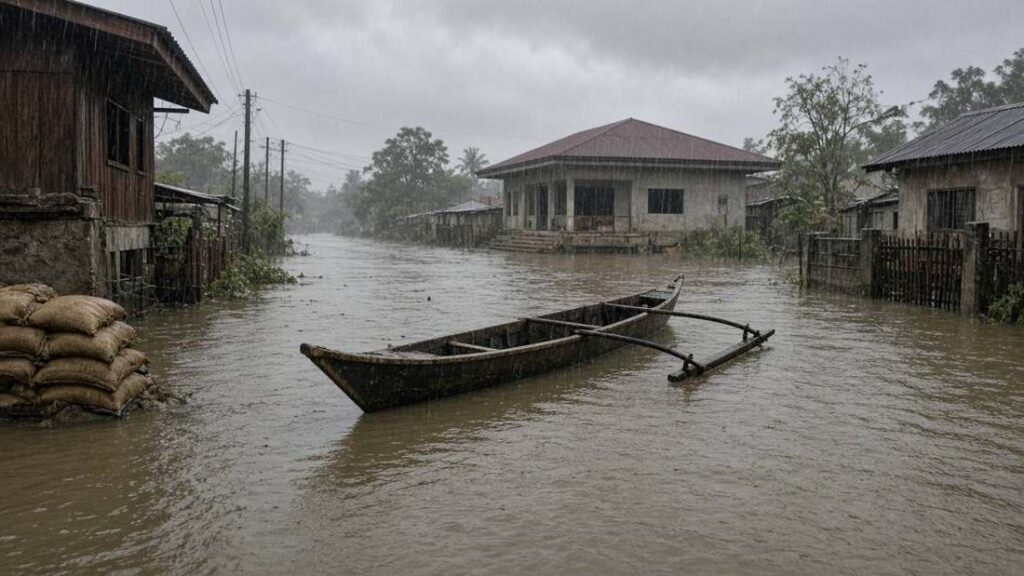
The combined effects of the enhanced southwest monsoon and tropical systems Luis, Maymay, Neneng, and Pilandok have once again reminded Filipinos that disaster law is not an abstract field studied only by officials and specialists. It governs evacuation, relief, school suspensions, local spending, access to shelters, public warnings, housing recovery, and the legal duties of both the state and private actors after floods. Public reports from August 2026 described severe flooding in Northern and Central Luzon, especially in parts of Cagayan Valley, La Union, and Pangasinan as Tropical Depression Luis moved through on 2 August. By 8 August, the southwest monsoon had brought major flooding to Antique, Aklan, Iloilo City, and Metro Manila, along with cancelled sea trips and even a tornado in Iloilo City.
The response has involved multiple field offices of the Department of Social Welfare and Development, including CAR, Regions I, II, III, CALABARZON, MIMAROPA, V, VI, VIII, IX, and NCR, with services ranging from relief distribution to camp coordination and camp management, as well as protection measures for internally displaced persons. Separate reports also place DSWD assistance for Tropical Storm Ferdie and the Kanlaon situation at P48.14 million as of 16 September 2026, with P37.67 million linked to Kanlaon and P10.47 million to Ferdie, while Ferdie alone reportedly affected 98,274 families or 357,906 persons in 764 barangays. These numbers show that hazard response in the Philippines is not episodic; it is a continuous legal and institutional burden.
RA 10121 and the Legal Framework for Disaster Response
The principal statute is Republic Act No. 10121, the Philippine Disaster Risk Reduction and Management Act of 2010. It is often discussed in terms of plans and councils, but its importance is deeper than organizational charts. It creates a framework that shifts disaster governance from mere reaction toward risk reduction, preparedness, response, and rehabilitation. This means the law does not begin only when floodwaters arrive. It requires hazard mapping, early warning, contingency planning, local coordination, and a system for delivering relief and protecting vulnerable persons once displacement occurs.
Under this framework, national agencies, local government units, and community-level bodies all carry responsibilities. The law assumes that floods will happen and demands that institutions prepare for them. When preparation fails or warning systems are plainly inadequate, legal questions follow. A disaster does not automatically mean the government is liable. The Philippines faces real climatic exposure. But where a failure involves ignored engineering risks, absent prepositioning, misuse of calamity funds, or disregard of known danger, the line between unfortunate natural event and legally actionable neglect becomes worth examining.
The Duties of LGUs Before and During Floods
Local government units stand on the front line of disaster law because they exercise police power closest to the affected population. They issue local warnings, decide on pre-emptive evacuation, open shelters, manage traffic and rescue routes, and coordinate with barangays on relief. In law, this is not a charitable option. It is part of their public duty. LGUs are expected to act on official forecasts, river monitoring, drainage conditions, and local hazard data. Failure to do so can become a subject of administrative, civil, or even criminal scrutiny when lives are lost or public money is mishandled.
Still, the public should understand that the law gives LGUs judgment, not omnipotence. Conditions vary sharply from city to city and municipality to municipality. An action reasonable in a coastal town may be insufficient in a river basin or informal settlement area. The legal standard is therefore not perfection, but reasonable and diligent performance measured against known risk. Whether an LGU acted lawfully often depends on records: advisories issued, evacuation orders documented, rescue assets deployed, and spending properly supported. In disasters, paperwork is not bureaucracy for its own sake. It is evidence of governance.
Forced Evacuation and the Limits of State Power
Flood events often revive the debate over forced evacuation. May local officials compel people to leave dangerous homes or low-lying communities? As a rule, yes, within the bounds of law and necessity. The power derives from the duty to protect life, public safety, and health. Yet compulsory evacuation is not lawless coercion. It must be anchored in actual danger, applied in good faith, and carried out with humane treatment. Officials cannot invoke hazard response as a blank check for abusive force, arbitrary detention, or discriminatory exclusion from shelters.
For residents, this means refusal to evacuate is not always a protected personal choice when rescue risks later extend to neighbors and responders. For government, it means evacuation orders should be communicated clearly, documented properly, and paired with accessible shelter arrangements. Evacuation without dignified shelter, food, sanitation, and protection for women, children, older persons, and persons with disabilities is not a full legal response. Disaster law is not satisfied by moving bodies out of sight. It includes the conditions under which displaced people survive and recover.
Relief, Shelters, and Protection of Internally Displaced Persons
The reference in public reports to CCCM and internally displaced person protection is important. Flood response is not just about sacks of rice and bottled water. It is also about camp management, privacy, family tracing, health access, gender-sensitive arrangements, and the prevention of abuse in crowded shelter settings. DSWD field operations matter because displacement can expose families to trafficking risk, child protection concerns, harassment, loss of documents, and breakdown of community support systems. The legal architecture must therefore treat shelters as rights-sensitive spaces, not mere holding areas.
Citizens should know that they may lawfully ask for transparent relief distribution procedures, posted beneficiary lists where appropriate, and fair prioritization based on vulnerability. Political favoritism in aid distribution is not only morally wrong; it may also violate administrative and anti-graft principles. Relief goods funded by public resources are not campaign tools. In post-disaster settings, the demand for dignified and impartial service is part of the rule of law, especially where scarcity and disruption make communities more vulnerable to coercion.
- LGUs must coordinate warnings, evacuation, and shelter operations
- DSWD support includes relief, camp management, and protection services
- Displaced persons remain entitled to dignity, safety, and access to documents and services
- Relief distribution should not be politicized or used as patronage
Calamity Funds, Emergency Procurement, and Accountability
One of the most misunderstood parts of disaster law concerns money. Once calamities strike, governments may access quick-response or disaster funds and may use emergency procurement methods for urgent needs. But urgency does not suspend accountability. The same flood that creates legitimate speed also creates opportunities for padded contracts, ghost deliveries, and undocumented withdrawals. That is why records, inspection, and audit remain crucial even in emergencies. Public necessity can justify simplified procedures, but it never justifies theft.
For contractors and suppliers, this means disaster transactions must still be carefully documented. Delivery receipts, inspection records, location tagging, and confirmation of use are not optional if one wishes to avoid later exposure under auditing rules or anti-corruption laws. For residents and civil society, it means that asking where relief money went is not obstructionist. It is part of democratic oversight. The law expects quick action and clean books at the same time.
After the Waters Recede: Housing, Tenancy, and Return
Legal hardship often intensifies after floodwaters go down. Renters return to damaged homes and discover disputes over repairs, security deposits, or premature eviction. Informal settlers may face renewed demolition pressure under the language of danger reduction. Homeowners may confront title and boundary problems if markers were destroyed. Families in shelters may be told to leave before safe return is realistic. Disaster law therefore intersects with property law, tenancy, local ordinances, and social housing policy. Recovery is not only engineering; it is legal navigation.
Landlords are not automatically liable for every flood-related loss, but neither may they ignore building safety issues, habitability concerns, or contractual obligations. Tenants should document pre- and post-flood conditions, communications with owners, and expenses incurred because a property became unlivable. In some cases, the question will be whether the premises remain fit for use. In others, it will be whether a local government order or engineering assessment limits occupancy. Clear written communication is essential before either side asserts abandonment, forfeiture, or default.
Insurance, Private Liability, and Flood-Related Claims
Flood losses also raise questions about insurance and claims against private actors. Many policyholders discover too late that flood, sewer backup, landslide, or business interruption coverage is narrower than they assumed. Others fail to notify insurers within required periods. Businesses should preserve photographs, inventories, delivery records, repair estimates, and power outage logs immediately. Households should keep copies of barangay certifications, engineering assessments, and receipts for emergency spending. Good claims begin with good records.
There are also situations where liability may arise not from the storm itself but from human acts that worsened the impact: blocked waterways, negligent construction, defective drainage works, poorly maintained dikes, or unlawful obstructions on natural channels. Not every flood translates into a viable lawsuit, but the possibility should not be dismissed automatically. Where evidence shows that a private actor materially increased foreseeable flood damage, civil remedies may deserve consideration alongside insurance recovery.
Build-Back Better Is a Legal Obligation Too
The phrase “build back better” is sometimes used so casually that it loses meaning. Under the logic of RA 10121, however, rehabilitation should reduce future risk, not simply restore pre-disaster vulnerability. Roads, drainage, schools, bridges, relocation sites, and health facilities should be repaired with resilience in mind. If reconstruction funds are spent only to recreate the same exposure, public money is being used to purchase repeat disaster. That is poor policy and potentially poor governance.
The mention of Kanlaon and Ferdie alongside monsoon flooding is a reminder that hazards overlap in the Philippines. A town recovering from ashfall or evacuation may also face heavy rains, class disruption, or infrastructure strain. The legal system must therefore support longer planning horizons, not event-by-event improvisation. Disaster governance works best when planning, budgeting, land use, and social protection are coordinated rather than fragmented across agencies and headlines.
The Rule of Law During Bad Weather
Monsoon disasters test more than drainage systems. They test whether the rule of law remains visible when communities are stressed, displaced, and dependent on government response. Laws like RA 10121 matter because they convert public obligations into standards that citizens can invoke and evaluate. They tell officials to prepare, warn, evacuate, protect, document, and rebuild with integrity. They also remind the public that disaster response is not charity from the state. It is part of lawful governance.
As the country faces continued flood risk, citizens should pay attention not only to rainfall forecasts but to the quality of institutions acting behind those forecasts. Good disaster law does not prevent every tragedy. But it can reduce loss, protect dignity, and make recovery fairer and more accountable. That is the legal architecture worth demanding, especially when storms and monsoon systems keep returning faster than communities can fully recover from the last one.
This article is for general information only and is not legal advice. For advice on flood-related claims, local government duties, housing disputes, insurance, or post-disaster remedies, consult a licensed Philippine lawyer.