Legal Insights
After the MV June Aster Fire: Maritime Safety, Liability, and the Rights of Families
An examination of carrier liability, passenger rights, insurance, criminal negligence, and identification issues after the deadly MV June Aster fire off Coron.
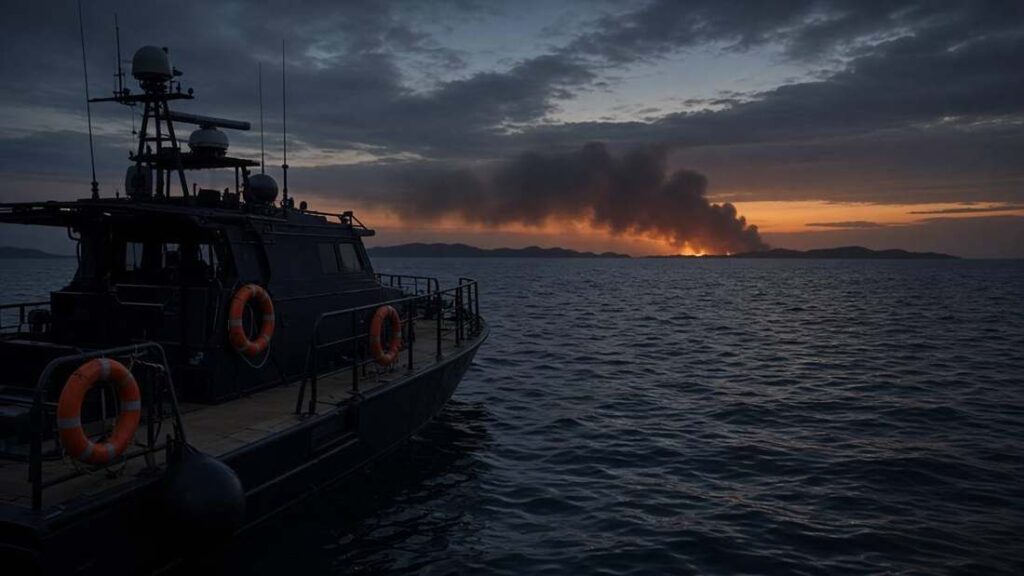
An examination of carrier liability, passenger rights, insurance, criminal negligence, and identification issues after the deadly MV June Aster fire off Coron.
Fortun and Santos Law Offices
The fire aboard the MV June Aster on the evening of 9 September 2026 has become one of the most painful maritime tragedies in recent Philippine memory. Public reports place the incident at around 6:45 p.m., roughly 2.2 kilometers off Coron, Palawan, after an explosion was reported in the cargo hold followed by smoke and fire. The vessel, owned by Atienza Interisland Ferries Inc., had departed the Port of Manila at 8:13 p.m. on 8 September for Coron. It was a steel-hulled ship built in 2002, reportedly rated for 306 passengers and 27 crew, with approximately 132 persons aboard after two passengers reportedly missed the trip. As of 16 September 2026, public accounts say 77 people had died, 12 remained missing, and 43 survived.
Those figures alone explain the public grief. But legal questions follow closely behind grief in any major sea disaster. Families need to know their rights. Carriers need to understand the scope of their duties. Regulators must determine what happened without rushing to prejudge individuals. And investigators must preserve evidence in a way that allows civil, administrative, and criminal accountability to proceed fairly. Reports also note that many fatalities were found in accommodation areas and cabins, and that 41 unidentified victims were temporarily buried pending PNP DNA matching. These details raise issues involving carrier liability, emergency response, identification procedures, insurance claims, and the handling of missing persons.
The Legal Duty of a Sea Carrier
Philippine law has long treated common carriers as owing a very high degree of diligence to passengers. That principle appears in the Civil Code and works alongside older maritime concepts from the Code of Commerce and modern transport regulation. In passenger carriage, the basic premise is simple: when a company offers public transport by sea, it undertakes more than a casual obligation. It assumes a legally exacting duty to carry passengers safely, maintain a seaworthy vessel, properly train its crew, manage cargo safely, and respond effectively in emergencies.
This standard does not mean a carrier is automatically guilty whenever tragedy occurs. Fires at sea can involve hidden mechanical failure, cargo ignition, human error, inadequate suppression systems, defective maintenance, or a combination of factors. The law therefore requires investigation before judgment. Still, once loss of life on this scale occurs, the carrier will almost certainly need to explain whether it exercised extraordinary diligence in vessel maintenance, loading procedures, stowage, fire detection, route preparedness, passenger accounting, muster protocols, and evacuation. In transport law, documentation and systems matter as much as verbal assurances after the fact.
Why the Cargo Questions Matter
Public reports describe the vessel as carrying motorcycles, an electric car, a forklift, a pickup truck, rice, and eggs. That cargo profile matters legally because different cargo types create different fire and safety risks. Vehicles, batteries, fuel residues, heavy equipment, and mixed freight require careful stowage, ventilation, segregation, and monitoring. If the initial reported explosion indeed originated in the cargo hold, investigators will necessarily examine whether declarations were complete, whether hazardous characteristics were properly assessed, and whether loading and securing complied with maritime safety rules.
The presence of an electric vehicle will understandably draw public attention, but lawyers should resist simplistic cause theories until official findings emerge. Fire origin investigations are technical. The legal inquiry should be broader: whether the carrier, the ship’s officers, the loaders, and any shippers complied with applicable rules on declaration, handling, storage, and firefighting readiness. Liability may turn not on one dramatic object in the hold, but on the total safety system surrounding mixed cargo transport on a passenger vessel.
Roles of MARINA, the PCG, and Investigators
In incidents like this, the public will hear from several agencies, each with a different role. The Philippine Coast Guard, including officials such as Commodore Noemie Cayabyab identified in reports, handles search, rescue, and aspects of maritime casualty response. MARINA has regulatory authority over domestic shipping standards, vessel certification, and related administrative compliance. Other authorities may participate in forensic identification, safety analysis, and prosecution support. The key point is that no single press statement resolves all legal issues. Administrative, civil, and criminal tracks may proceed at different speeds and toward different conclusions.
That is why families should preserve every document they receive: tickets, manifests, communications from the company, hospital or morgue records, rescue certifications, and notices relating to claims or identification. Official findings may take time, especially where evidence is fragmented, the vessel is damaged, and bodies must be identified through DNA. Early paper trails often become decisive later when reconstructing whether a passenger boarded, where the passenger was assigned, what the company promised, and what assistance the family was offered or denied.
The Captain, the Crew, and the Need for Fair Investigation
Reports say that Captain Roel Sarmiento appeared on 14 September at a company office in Palawan with human resources official Dindo Macalinao and was later brought to the Coast Guard. In public tragedies, attention often centers immediately on the captain. That is understandable because the master of the vessel occupies a position of legal command. But fair process requires caution. A captain may bear responsibility for command decisions, yet a casualty of this scale may also involve structural maintenance issues, cargo handling procedures, crewing levels, safety equipment, company directives, or regulatory shortcomings beyond one person.
Not prejudging the captain is not the same as excusing anyone. It means allowing the legal system to determine whether criminal negligence, violation of maritime rules, falsification, abandonment of duty, or other offenses can be proven with evidence. The same restraint should apply to the company and to regulators. Public anger can be justified, but accountability built on rushed assumptions often collapses in court. Families are best served by a thorough record capable of sustaining responsibility, not by speculation that cannot survive legal scrutiny.
Civil Claims by Families of the Dead, Missing, and Survivors
Under Philippine law, the families of deceased passengers, injured survivors, and in some cases even those still missing may have claims for damages against the carrier and possibly other responsible parties. These may include actual damages, funeral and medical expenses, loss of earning capacity where provable, moral damages, and other relief depending on the facts. Because common carriers owe extraordinary diligence, the legal burden on the company can be significant once death or injury in transport is established, although the precise defenses available will depend on the evidence and the applicable causes of action.
Survivors may also have independent claims even if they suffered no catastrophic physical injury. Trauma, lost belongings, interrupted travel, and prolonged treatment can all produce legally relevant harm. Families should be cautious about accepting quick settlement approaches without understanding what rights may be waived. The first amount offered after a disaster is not always the full measure of lawful entitlement. Before signing releases, claim forms, or affidavits drafted by others, affected persons should seek independent legal advice and ensure they understand whether they are giving up broader claims.
- Keep tickets, IDs, receipts, and any proof of boarding or rescue
- Request copies of death certificates, medico-legal findings, and identification records when available
- Document all expenses related to travel, burial, hospitalization, and temporary lodging
- Be careful with releases or quitclaims offered before full facts are known
- Ask for written explanations of insurance and compensation programs
Insurance, Compensation, and Administrative Relief
Many passengers assume that the existence of insurance automatically solves post-disaster hardship. In practice, insurance is only part of the picture. The amount, scope, and conditions of passenger accident coverage may vary, and administrative processing can take time. There may also be protection and indemnity arrangements, corporate policies, or government-facilitated aid that operate separately from civil litigation. Families should not confuse interim assistance with a final settlement of all legal claims. A condolence payment or initial support package may help urgently needed expenses without necessarily exhausting liability.
At the same time, businesses and shipowners should understand that cooperative claims handling is legally and morally important. Post-incident obstruction, incomplete disclosure, or poor documentation can worsen liability. The best corporate response after a maritime casualty is not defensive silence but organized, lawful transparency: verified passenger lists, clear claims channels, preservation of records, and active coordination with regulators and families. Companies that treat documentation seriously from the outset are better positioned both to assist victims and to defend themselves honestly where allegations exceed what evidence supports.
The Special Problems of Unidentified Victims and Missing Persons
The report that 41 unidentified victims were temporarily buried pending DNA confirmation is a reminder that maritime law is also deeply human law. Identification is essential not only for closure but for succession, insurance, civil claims, burial decisions, and official registration of death. Families should coordinate carefully with the PNP, local authorities, and medico-legal personnel regarding samples, reference profiles, chain of custody, and documentary acknowledgment of submissions. Small record-keeping mistakes can later create painful delays.
For those still missing, the law can be especially difficult. A person lost at sea is not simply erased because recovery is delayed. Families may need guidance on presumptive death rules, estate administration, insurance processing, and the timing of civil actions while search efforts continue. Different legal consequences attach at different stages, and there is no single form that answers everything. The humane approach is to allow ongoing search and identification while preserving families’ ability to pursue necessary legal remedies without unnecessary bureaucratic cruelty.
Possible Criminal Liability Without Rush to Judgment
Where multiple deaths occur in public transport, criminal investigation is expected. Depending on the final evidence, prosecutors may examine reckless imprudence resulting in homicide, violations of safety laws, falsification of records, or other offenses. Yet criminal liability requires proof beyond reasonable doubt and should not be presumed solely from the magnitude of loss. The law must determine who knew what, who failed to do what, and how those omissions connect causally to the deaths and injuries. That analysis may involve officers, crew, company managers, cargo personnel, inspectors, or others.
For families, the existence of a criminal case does not automatically replace civil remedies. Often, both tracks matter. Criminal prosecution can establish public accountability and deterrence, while civil claims address compensation for private loss. Administrative sanctions can separately affect licenses, permits, or certifications. A single casualty therefore produces a web of legal consequences, and each track has its own rules of proof, pace, and objective. Understanding that complexity can help survivors avoid false expectations and missed deadlines.
Why This Case Matters for Domestic Shipping Safety
The MV June Aster tragedy is not only about one route between Manila and Coron. It also raises broader questions about domestic passenger shipping in an archipelagic country where sea travel remains indispensable. Vessel age, maintenance culture, cargo-passenger interface, route oversight, nighttime operations, emergency drills, and rescue coordination all deserve close review. Maritime accidents in the Philippines are often discussed intensely for several days and then folded into memory. That pattern serves no one. The law should force institutional learning as well as compensation.
Families of the dead and missing deserve more than sympathy. They deserve truth, due process, and accountable enforcement. Survivors deserve medical, psychological, and legal support. Carriers deserve fair investigation, but not indulgence. Regulators deserve cooperation, but also scrutiny. In a nation dependent on inter-island shipping, a passenger does not step onto a vessel merely as a traveler. He or she steps into a legal relationship of trust backed by some of the strongest duties recognized in transport law. When that trust ends in fire and mass death, the law must respond with seriousness equal to the loss.
This article is for general information only and is not legal advice. For advice on specific claims, documents, compensation, or criminal and administrative proceedings, consult a licensed Philippine lawyer.