Legal Insights
No New Flood Control Projects in 2027: Completing Unfinished Works After the Ghost-Project Scandal
How the 2027 flood-control budget debate connects unfinished works, anti-graft law, procurement reform, public trust, and the need for credible climate adaptation.
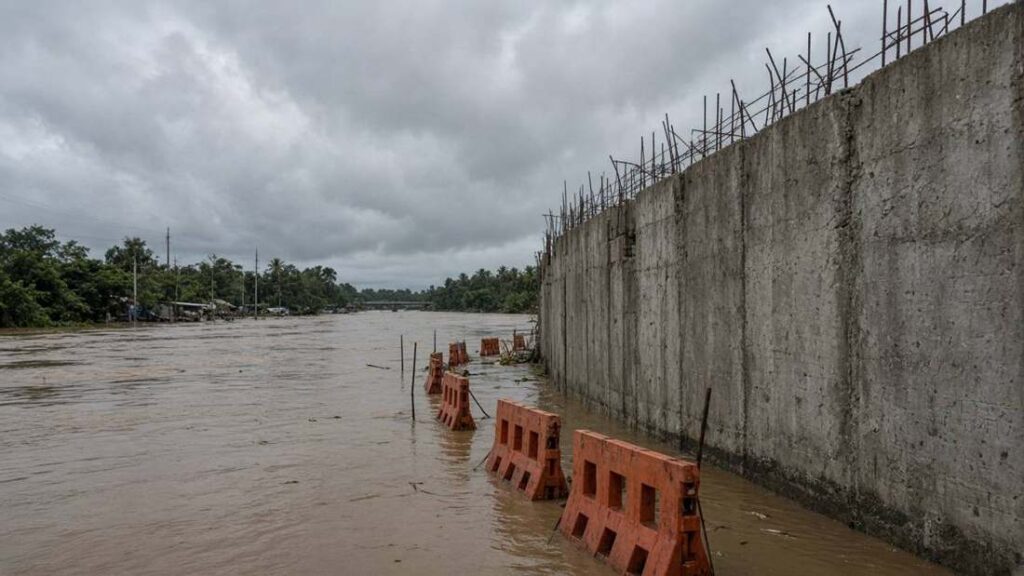
How the 2027 flood-control budget debate connects unfinished works, anti-graft law, procurement reform, public trust, and the need for credible climate adaptation.
Fortun and Santos Law Offices
When floodwaters rise in Tarlac, Pampanga, Bulacan, and Metro Manila, public frustration naturally focuses on pumps, drainage, roads, and rescue. But in 2026, flood politics became inseparable from corruption politics. Public reports now quote Senate Finance Chair JV Ejercito as saying that there will be no new flood control projects in the 2027 budget; instead, government should finish uncompleted works and close gaps, especially in Luzon. The statement follows the withholding of locally funded flood mitigation allocations in the 2026 General Appropriations Act after allegations involving ghost, substandard, and duplicate projects linked to lawmakers, DPWH engineers, and contractors. In response, DPWH has reportedly proposed P107.4 billion for flood control in 2027, the lowest level since 2019, including P83.84 billion locally funded, plus around P19.6 billion for ongoing foreign-assisted projects and P3.41 billion for the MMDA flood program.
Acting Budget Secretary Kim de Leon has reportedly said the government cannot neglect projects already started and must maintain, repair, and complete ongoing works while tagging locations and programs of work to prevent ghosts. There are also calls for a national master plan covering the top flood-prone provinces, 18 major river basins, and a 30- to 50-year roadmap, along with a ban on last-minute bicameral insertions. These statements frame the central legal tension: climate adaptation demands sustained infrastructure, but infrastructure spending without integrity becomes another disaster multiplier. The rule of law has to solve both problems at once.
Why “No New Projects” Is a Legal Strategy, Not Just a Budget Slogan
At first glance, refusing to add new flood control projects during a flood crisis may sound counterintuitive. Yet as a legal and governance strategy, it has a clear logic. A project pipeline clogged with unfinished, duplicative, or fraudulent works is not cured by layering more appropriations on top. If public reports are accurate that some 2026 allocations were withheld because of ghost or substandard projects, then the first obligation of Congress and the executive is to restore credibility to existing implementation. Completion, validation, and physical tagging can be stronger anti-corruption tools than announcing fresh line items.
This approach also recognizes a practical truth: in flood infrastructure, gaps between segments can destroy the usefulness of entire systems. A partially completed dike, pumping network, diversion channel, or drainage link may offer less protection than its budget would suggest. Finishing ongoing works therefore has legal value beyond bookkeeping. It aligns expenditure with actual hazard reduction. Public money should be measured by protective function, not by ribbon-cutting opportunities.
The Corruption Laws Already Exist
One important point in this debate is that the country does not lack legal weapons against flood-control corruption. Republic Act No. 3019, the Anti-Graft and Corrupt Practices Act, remains central where public officers give unwarranted benefits, act with manifest partiality, or cause undue injury to the government. Depending on the amounts and evidence, plunder laws may also come into view. COA rules, procurement law, contractor blacklisting mechanisms, and doctrines involving unexplained wealth and civil forfeiture all provide tools for response. The problem is less the absence of law than the unevenness of enforcement.
That reality matters because every typhoon or habagat season produces renewed calls for accountability, yet many cases stall in documentation gaps, weak project verification, or fragmented agency records. If ghost projects are to be confronted seriously, records must connect appropriations, locations, engineering plans, inspection results, progress billings, contractors, and responsible officials in a way courts and auditors can use. Outrage is politically loud but legally thin unless evidence is organized.
- RA 3019 addresses corrupt practices by public officials
- RA 9184 and related procurement rules govern bidding and contract integrity
- COA audit findings can expose ghost, duplicate, or substandard works
- Plunder, unexplained wealth, civil forfeiture, and blacklisting may apply in serious cases
Procurement Under RA 9184 and the Problem of Fake Competition
Flood-control spending rises and falls within the shadow of Republic Act No. 9184, the Government Procurement Reform Act. Competitive bidding, detailed specifications, eligibility checks, and post-qualification exist to prevent favoritism and fraud. In practice, however, procurement can still be manipulated through tailored specifications, collusive bidding, recycled project descriptions, or political pressure over project siting. A flood-control contract that looks regular on paper may hide a prearranged outcome if oversight is weak.
That is why the reported proposal to tag exact locations and programs of work is legally significant. Procurement integrity depends not only on who won the bid but on whether the project physically exists where the documents say it exists and whether it performs the protective function claimed. In sectors vulnerable to repetition and fragmentation, geotagging, public disclosure, and standardized engineering descriptions can make fraud much harder to hide. Procurement law becomes more effective when paper trails connect clearly to ground truth.
Unfinished Works, Maintenance, and the Duty Not to Abandon
The reported position of Acting Budget Secretary Kim de Leon that ongoing projects cannot simply be neglected is legally and practically sound. Once flood-control works are started, abandoning them can expose communities to risk, waste sunk cost, and create new engineering problems. A half-built channel, culvert, revetment, or embankment can alter water flow in damaging ways. Government therefore has a duty not only to investigate bad projects but also to manage the hazards created by incompletion itself.
This is where anti-corruption and climate adaptation must be carefully balanced. Freezing all action may look strict, but it can punish the public if critical projects deteriorate further. The law should instead support a disciplined triage: identify which projects are valid but unfinished, which require redesign, which are substandard, which are fraudulent, and which should be terminated with recovery actions pursued against responsible parties. A blanket halt is easy to announce; intelligent completion is harder and more useful.
Why a National Master Plan Matters
The reported call for a 30- to 50-year national master plan tied to major river basins and the most flood-prone provinces goes to the heart of lawful public planning. Flood control is often distorted by annual budgeting and political geography. Projects multiply because each locality wants visible works, not because the hydrology justifies them. A basin-wide approach can reduce this fragmentation by asking how water actually moves across jurisdictions. Rivers and runoff do not respect electoral boundaries; a legal planning system should not pretend otherwise.
From a governance standpoint, a master plan also helps evaluate whether last-minute project insertions are legitimate. If a proposed line item cannot be reconciled with basin logic, hazard maps, engineering priorities, or continuity with existing systems, its inclusion should be suspect. Long-range planning does not solve corruption automatically, but it narrows the space for arbitrary and politically motivated spending. Law becomes more credible when appropriations follow a publicly defensible plan.
The Case Against Last-Minute Bicam Insertions
Calls to ban or tightly restrict last-minute bicameral conference committee insertions reflect deep public mistrust in how infrastructure budgets are finalized. While Congress has broad power over appropriations, transparency is a constitutional value, not a courtesy. Projects inserted late with minimal scrutiny are more vulnerable to weak vetting, duplication, or political favoritism. In high-risk sectors like flood control, where technical justification and continuity are essential, opaque insertions can be especially damaging.
A lawful appropriations process should allow the public, oversight bodies, and implementing agencies to know what is being funded and why. The more compressed and hidden the insertion process becomes, the easier it is for responsibility to diffuse. When disaster infrastructure is concerned, that opacity is costly. Every unnecessary or fraudulent project is not merely a fiscal loss; it is a missed opportunity to reduce real flood risk in communities that may be inundated again next month.
Climate Adaptation Cannot Wait for Perfect Government
Some observers fall into a false binary: either spend aggressively on climate adaptation despite corruption risk, or stop spending until the system is perfectly clean. The law should reject both extremes. The Philippines cannot suspend flood resilience while institutions purify themselves at leisure. Communities remain exposed, and severe weather will not pause for procurement reform. But neither can the country defend adaptation by tolerating theft. Corrupt flood-control spending compounds vulnerability because it converts public funds into false security.
The better legal stance is disciplined urgency. Continue what is necessary, complete what is valid, investigate what is suspicious, cancel what is fraudulent, recover what can be recovered, and redesign future funding around transparency and basin-wide planning. This is more administratively demanding than a total stop or a business-as-usual budget, but it better matches the constitutional duties of both stewardship and protection.
What Contractors and Local Governments Should Expect
Contractors working in flood mitigation should expect tighter scrutiny of qualifications, physical accomplishment, billing support, and project location data. Good contractors should welcome this, because weak oversight harms legitimate firms by rewarding politically connected but technically poor competitors. Local governments should also expect more pressure to justify priorities and integrate local requests with national basin planning. The era of treating every drainage wish list as a self-validating public work should be ending.
For communities, this greater scrutiny may feel slow, especially when visible flooding continues. Yet speed without integrity has already proven costly. The more credible path is one in which people can see what project is being completed, where it is located, what gap it closes, and who is answerable if it fails or never existed. Public communication should improve accordingly. Citizens deserve more than giant budget totals. They deserve intelligible maps of protection.
Flood Control as a Test of the Republic
The decision to avoid new flood-control projects in 2027 while prioritizing unfinished works will ultimately be judged by outcomes, not rhetoric. If it results in better completion rates, cleaner documentation, stronger prosecutions, and more coherent basin-wide protection, it may mark a necessary correction after years of distorted spending. If it becomes merely a headline while unfinished works languish and communities continue to flood, public cynicism will deepen. The rule of law is tested not when reform is announced, but when it is administered.
Flood control is a profoundly civic form of infrastructure. Its success is measured in homes not inundated, schools not closed, harvests not destroyed, and lives not endangered. To steal from it is to steal twice: first from the treasury, and second from the safety of the public. That is why the current moment matters. The country has a chance to insist that climate adaptation and anti-corruption are not rivals but partners. If government can complete what is real, expose what is fake, and plan what is necessary, the next budgets may finally begin to earn the trust that flood-prone communities have been asked to give for too long.
This article is for general information only and is not legal advice. For advice on procurement exposure, contractor liability, local government obligations, anti-graft proceedings, or related remedies, consult a licensed Philippine lawyer.