Legal Insights
EDCOM 2 Warns Blanket Class Suspensions Are Deepening the Learning Crisis
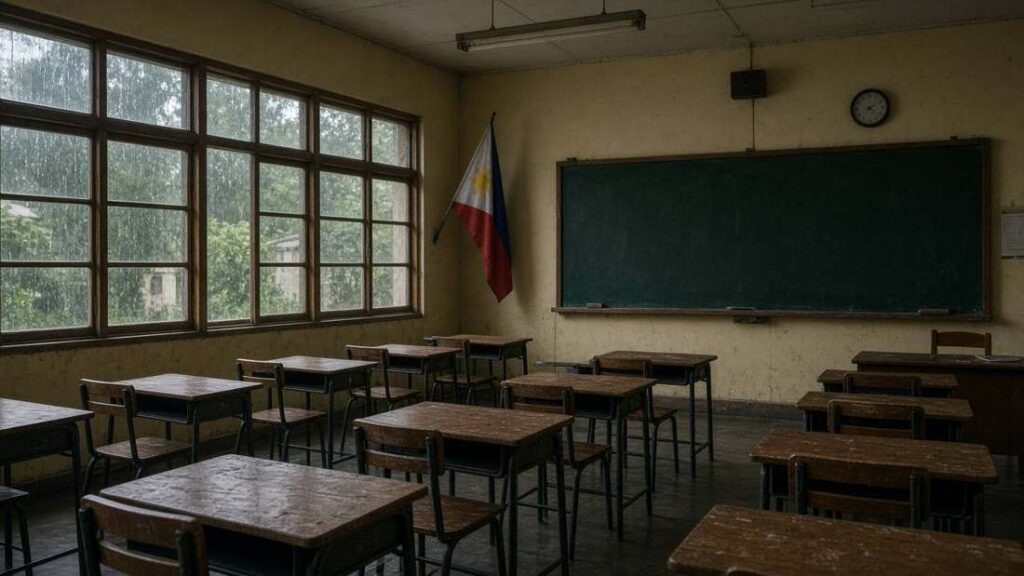
A constitutional and policy analysis of how repeated blanket class suspensions are affecting learning loss, child protection, and the right to education.
A constitutional and policy analysis of how repeated blanket class suspensions are affecting learning loss, child protection, and the right to education.
Fortun and Santos Law Offices
In the Philippines, class suspensions are often treated as commonsense acts of caution, and in many situations they are exactly that. But a policy note from EDCOM 2, publicly discussed around 15 to 16 September 2026 under the title The Hidden Cost of Class Suspensions, argues that repeated blanket suspensions are producing a serious learning loss with constitutional and governance consequences. According to the reported findings, a typical public elementary school in school year 2025-2026 lost around 20 teaching days to hazard-related suspensions, or about one in every ten calendar school days. Even more striking, from 1 August to 15 September 2026, 12 of 28 class days in the National Capital Region and several provinces were cancelled, amounting to roughly 43 percent of the period’s scheduled term days.
The note reportedly examined more than 37,000 public elementary schools over two school years and found that suspensions were associated with a 0.10 standard deviation decline in reading, equivalent to about 24 teaching days of progress, or around 1.4 days of reading progress lost for every suspended day. Meanwhile, DepEd has reportedly estimated P8.267 billion in response and recovery needs after the southwest monsoon and tropical cyclones Luis, Maymay, Neneng, Obet, and Pilandok since 3 August, affecting 2,537 schools and 11,995 classrooms, with costs spanning cleanup, minor repairs, major repairs, and reconstruction. Separate reporting notes average school days lost of 15 in the last two school years, with Negros Occidental at 71 and Canlaon City at 61 due largely to Kanlaon. The legal issue is no longer whether suspensions are inconvenient. It is whether the current approach is lawful, proportionate, and compatible with the right to education.
The Constitutional Right at Stake
Article XIV of the 1987 Constitution commits the State to protect and promote the right of all citizens to quality education at all levels and to take appropriate steps to make such education accessible. This guarantee is not suspended every time weather worsens. Of course, the State must also protect life and safety. The constitutional problem emerges when safety responses become overly blunt, repetitive, or unsupported by better continuity measures, such that the educational right is steadily hollowed out by default. A constitutional system must hold both values together: protection from hazard and meaningful access to learning.
That balance has become harder under the three-term school calendar and a hazard environment in which rain, flooding, volcanic unrest, heat, and transport disruption can all interrupt face-to-face learning. But difficulty does not remove duty. If students are losing weeks of effective instruction, the legal system must ask whether current suspension practices, local decision rules, school infrastructure, and recovery plans are adequate. The right to education is not vindicated by good intentions alone. It requires systems that preserve learning as much as safety permits.
EO 66 and the Limits of Blanket Suspension Rules
The policy note’s reported call to amend Executive Order No. 66, series of 2012, deserves close attention. EO 66 established rules linking class suspensions largely to tropical cyclone warning signals and local executive decisions. That framework made sense as a practical simplification, but the hazard environment now appears more complex. Heavy rain, urban flooding, extreme heat, earthquakes, volcanic emissions, and transport disruption may not align neatly with typhoon signal categories. A system overly dependent on broad executive calls can produce both over-suspension and under-protection.
A more science-based regime, as EDCOM 2 reportedly recommends, would move toward automatic thresholds tied to actual conditions such as rainfall intensity, flood depth, local geohazards, earthquake impact, volcanic ash, and heat. That does not eliminate discretion, but it disciplines discretion. Law works best when it reduces arbitrary variation and makes decision-making explainable. If one city suspends nearly half of all class days in a period while another manages continuity under similar conditions, the difference should be studied, not shrugged off as local style.
- Hazard response must protect both safety and learning continuity
- Typhoon signal-based rules may be too blunt for today’s hazard mix
- Automatic science-based thresholds can reduce arbitrary suspensions
- Localized authority may be more lawful and proportionate than blanket provincial or regional cancellations
Why Localized Decisions Can Better Fit the Law
The recommendation for more localized suspensions and increased authority for school heads to suspend or resume classes is not merely an administrative convenience. It reflects a legal principle of proportionality. Police power measures that burden a constitutional interest should be reasonably tailored to actual risk. In a province or large city, conditions can vary dramatically between upland areas, river-adjacent communities, schools with sound buildings, and schools serving students who must cross flood-prone roads. Blanket action may be easy to announce, but it is not always the best legal fit.
Giving school heads a stronger role can improve responsiveness, provided clear criteria and accountability remain in place. A principal may know whether classrooms are intact, whether roads are passable, whether evacuation centers occupy school grounds, and whether modular or shifted classes are feasible. The law should empower informed decision-makers closest to conditions while preserving oversight against inconsistency or abuse. Good decentralization is not abdication. It is structured discretion guided by standards.
Child Protection Does Not End When Classes Stop
Suspending classes may reduce immediate travel and exposure risk, but it can also create child protection concerns that receive less public attention. Children left at home while parents work may be less supervised. Learning gaps widen more quickly for those without connectivity or learning support. Nutritional access may suffer where school-based feeding or routine health checks matter. Community violence, online risk, and exploitation can rise when long disruptions become normalized. This is why the legal discussion cannot treat “no class” as a neutral state. It is itself a condition with consequences for children’s welfare.
The reference to DSWD and other social support mechanisms in related disaster reporting reminds us that education policy and protection policy are linked. If a suspension becomes necessary, the state should have corresponding learning continuity and child protection measures ready, especially for younger learners and vulnerable households. Otherwise, the burden of adaptation falls entirely on families, deepening inequality. The constitutional right to education is not only about formal school opening. It is also about whether the State meaningfully responds when schooling is disrupted.
Infrastructure Damage and the Cost of Recovery
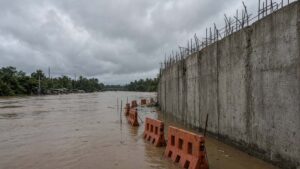
The reported P8.267 billion in DepEd response and recovery needs underscores that suspension policy cannot be separated from school infrastructure. If thousands of schools and nearly 12,000 classrooms have been affected by recent hazards, the legal issue is partly one of capital adequacy and public works execution. Cleanup and repair costs are not just budget lines. They determine whether schools can reopen quickly, whether double shifts become necessary, and whether communities drift into a semi-permanent emergency mode where suspensions recur because the physical system remains fragile.
Public spending decisions here have constitutional weight. Failing to restore classrooms promptly can make future suspensions more likely and deepen learning loss beyond the days already cancelled. It also raises procurement and anti-corruption questions. Repair and reconstruction funds must be spent quickly but cleanly. A classroom lost to weather and then delayed by procurement dysfunction represents a double injury to children: first from hazard, then from governance failure.
Learning Packets, Remote Workarounds, and Their Limits
Many officials respond to concerns about suspensions by pointing to learning packets, online assignments, or asynchronous make-up arrangements. These tools are useful, but they have limits. Not all households have internet access, devices, or adult supervision. Not all teachers can pivot instantly while also dealing with flood impact in their own homes. Younger children in particular lose heavily when structured, face-to-face instruction is replaced repeatedly by improvised home tasks. From a rights perspective, these workarounds help but do not fully substitute for classroom time.
This does not mean continuity tools should be abandoned. It means they should be built honestly around actual local capacity. A lawful and equitable response requires asking who can comply, who gets left behind, and what remedial support follows once classes resume. The three-term calendar may compress available time for catch-up, making quality continuity planning even more important. The legal objective is not merely formal compliance with a school-day count. It is meaningful educational access.
The Unequal Geography of Lost School Days
The reported figures from Negros Occidental and Canlaon City show why averages can hide severe inequality. Seventy-one lost days in one province and sixty-one in one city are not marginal disruptions. They reshape a child’s educational year. Areas exposed to volcanic activity, repeated flooding, or weak infrastructure can suffer cumulative disadvantage even while national calendars continue to move forward. This is not only an administrative issue. It is an equality issue. A national right to education loses credibility if geography determines whether students effectively receive a fraction of the learning time others enjoy.
For that reason, recovery policy should not be one-size-fits-all. Some areas may need aggressive catch-up programs, temporary classroom spaces, targeted reading recovery, psychosocial support, and locally adapted calendars. The law should permit flexible remediation rather than insisting that all schools move in lockstep despite sharply different disruption burdens. Equality sometimes requires differentiated support, not uniform neglect.
What Good Reform Would Look Like
If policymakers are serious about the warning from EDCOM 2, reform must go beyond debating whether this or that suspension call was prudent. The country needs clearer science-based triggers, narrower geographic targeting, stronger school-level discretion with accountability, better flood and heat resilience in school facilities, and robust make-up or recovery programs for the most affected learners. It also needs routine publication of lost-instruction data so that communities can see which regions are bleeding learning time and what is being done about it.
Above all, reform should reject the false choice between safety and education. The law requires both. The proper question is how to protect children from danger without surrendering their learning future one cancelled week at a time. If a suspension policy repeatedly produces massive loss while better-targeted and better-supported alternatives are available, then the issue is not just unfortunate weather. It is policy design.
A Learning Crisis Is Also a Governance Crisis
The value of the current debate is that it forces a legal and civic recognition many families have already felt in daily life: repeated blanket class suspensions carry real long-term cost. They affect reading, routines, child protection, parental work, and the legitimacy of a school system already under stress. In a constitutional democracy, the educational future of children cannot be treated as collateral damage of administrative convenience. Weather is inevitable. Learning loss on this scale should not be.
The challenge now is to turn data into institutional response. If the right to education means anything practical, it means government must keep refining the rules by which it interrupts schooling and the systems by which it restores it. Safety-first should not mean learning-last. The country can and must demand a legal framework that respects both realities at once.
This article is for general information only and is not legal advice. For advice on education rights, local school policies, administrative remedies, or related disputes, consult a licensed Philippine lawyer.