Legal Insights
DFA Tells China to Leave Panganiban and Zamora Reefs
Why the DFA’s latest West Philippine Sea statement matters under UNCLOS, the 2016 arbitral award, RA 12064, and the maritime rights of Filipino fisherfolk.
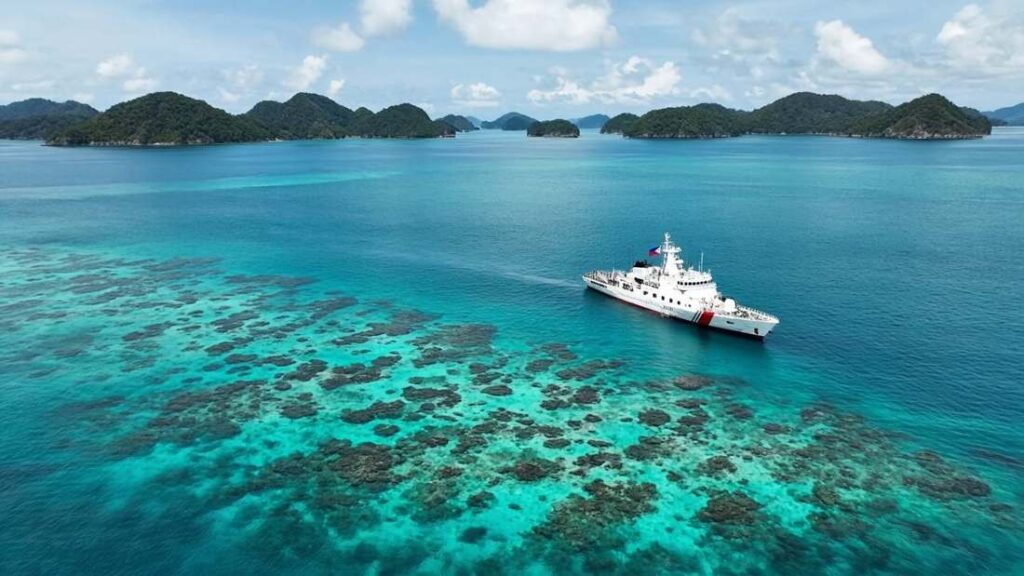
Why the DFA’s latest West Philippine Sea statement matters under UNCLOS, the 2016 arbitral award, RA 12064, and the maritime rights of Filipino fisherfolk.
Fortun and Santos Law Offices
On 11 September 2026, the Department of Foreign Affairs publicly told China to cease what it described as the illegal occupation of Panganiban Reef, widely known internationally as Mischief Reef, and Zamora Reef, widely known as Subi Reef, and to abide by the 2016 Arbitral Award. The statement is legally significant because it does not merely repeat a diplomatic complaint. It rests on a mature body of law involving UNCLOS, the arbitral ruling, and the Philippines’ own Republic Act No. 12064, the Philippine Maritime Zones Act. Public reports add that these features are low-tide elevations, that island-building does not alter that status, and that Chinese activities there therefore cannot create lawful sovereignty or new maritime entitlements by mere occupation and construction.
The legal background matters because facts at sea are often framed by sheer repetition. Structures are built, patrols are conducted, flares are fired, and survey vessels linger, all in the hope that persistence will blur the line between assertion and right. Reports also say that on 7 September Chinese forces fired flares at an unarmed Philippine Coast Guard maritime domain awareness aircraft en route toward Pag-asa, while issuing radio challenges. PCG Commandant Adm. Ronnie Gil Gavan has reportedly raised flight safety and “due regard” concerns under the Chicago Convention. Meanwhile, public statements by RADM Jay Tarriela described a Chinese survey vessel, Haiyang Dizhi Shihao, as having spent around 30 days inside the Philippine exclusive economic zone from 10 August, including 28 days off Bajo de Masinloc, without Philippine permission. These are not random incidents. They are legally connected acts within a contested maritime theater.
Why Low-Tide Elevation Status Matters So Much
In everyday language, the public may hear the word “reef” and assume that any structure above water can be treated like an island. International law is more precise. Under UNCLOS, a low-tide elevation is a naturally formed area of land surrounded by and above water at low tide but submerged at high tide. As a general rule, low-tide elevations do not generate their own territorial sea, exclusive economic zone, or continental shelf unless they lie within the territorial sea of a mainland or island and serve a limited baseline function. This classification matters enormously because it determines whether a state can lawfully claim sovereignty and maritime zones from the feature itself.
The 2016 Arbitral Award addressed exactly this kind of issue. The award concluded that certain disputed features in the South China Sea, including Mischief Reef, are low-tide elevations. Public reporting now indicates that the DFA has reaffirmed that both Panganiban and Zamora are low-tide elevations, and that reclamation or island-building does not transform them into natural islands under international law. This is a crucial point. Concrete, runways, and artificial installations may change the appearance of a feature, but they do not change the legal category that nature originally assigned to it.
Mischief Reef and the Philippine EEZ
The DFA’s statement that Panganiban Reef lies within the Philippines’ exclusive economic zone and continental shelf is consistent with the central finding of the 2016 award. In legal terms, this means the Philippines enjoys sovereign rights there for the purpose of exploring and exploiting natural resources, as well as related jurisdiction recognized by UNCLOS. These are not symbolic rights. They include authority over resource activities and the right to prevent unauthorized interference with the lawful exercise of Philippine entitlements in the zone.
Because Mischief Reef is a low-tide elevation within the Philippine EEZ and continental shelf, it cannot lawfully be appropriated as sovereign territory by another state. The legal injury is therefore not only about competing flags. It is about interference with the Philippines’ maritime entitlements and the attempt to create a false appearance of lawful possession through occupation and construction. This is precisely why legal clarity matters. Without it, repeated physical presence can mislead the public into believing that control alone creates title.
Subi Reef and the Territorial Sea of Pag-asa
The reported DFA position on Zamora Reef carries an additional layer of significance because it was described as being within the territorial sea of Pag-asa Island. If that is so, the Philippine legal argument is not limited to EEZ rights. It reaches sovereignty and territorial sea protection tied to Pag-asa. In practical terms, conduct at or around the reef is evaluated not merely as a resource-zone issue but as an encroachment affecting Philippine territorial waters associated with an island over which the Philippines asserts sovereignty.
This distinction matters for public understanding. Not every West Philippine Sea dispute involves the same legal regime. Some concern resource rights in the EEZ. Others concern territorial sea entitlements around islands. Some involve navigation, others fisheries, others air safety. A serious national discussion avoids flattening all incidents into one slogan. Precision strengthens diplomacy. When the Philippines states the exact legal basis of its protest, it improves the credibility of its position in international forums and in the court of public opinion.
- Low-tide elevations cannot be converted into natural islands by reclamation
- Mischief Reef lies within the Philippine EEZ and continental shelf under the 2016 award
- Subi Reef’s location relative to Pag-asa raises territorial sea implications
- Occupation and construction do not create lawful title under UNCLOS
What RA 12064 Adds to the Conversation
The mention of Republic Act No. 12064, the Philippine Maritime Zones Act, is important because it translates maritime entitlements into a clearer domestic legal framework. International law provides the substantive rights, but domestic legislation helps define how the Philippines describes, administers, and protects its maritime zones internally. In disputes involving foreign vessels, coast guard activity, or resource management, domestic law matters because it guides agency action, enforcement posture, and the legal vocabulary by which the state presents its claims to its own institutions and to the world.
RA 12064 does not invent the Philippines’ rights from nothing. Rather, it reflects and operationalizes them. That is why the DFA’s reference to the statute is not redundant. It signals that the maritime issue is not merely a matter of historical grievance or geopolitical rhetoric. It is embedded in positive law, both international and domestic. The more consistently the Philippines speaks from that legal foundation, the harder it becomes for competing narratives to recast the issue as one of equal ambiguity.
Flares, Aircraft Safety, and the Chicago Convention
The report that Chinese forces fired flares at an unarmed PCG maritime domain awareness aircraft on 7 September adds an aviation law dimension to a maritime dispute. Adm. Ronnie Gil Gavan has reportedly invoked the principle of “due regard” under the Chicago Convention, which is highly relevant. Even when states contest space or object to another state’s activities, they remain constrained by safety obligations. Conduct that endangers civil or state aircraft engaged in lawful operations can be condemned not only as aggressive diplomacy but as an aviation safety issue with wider international implications.
In legal terms, this matters because the Philippines need not treat every dangerous encounter solely as a sovereignty argument. Some acts can and should be framed as violations of broader safety norms that concern the international community as a whole. That framing does not replace maritime claims, but it supplements them. A well-argued legal position often gains strength when it shows that a single act simultaneously threatens sovereign rights, navigational order, and civilian safety.
Survey Vessels, Marine Scientific Research, and Consent
The reported presence of the survey vessel Haiyang Dizhi Shihao inside the Philippine EEZ without permission raises another branch of UNCLOS law: the regulation of marine scientific research and related survey activities in a coastal state’s zone. Not every vessel movement in an EEZ is prohibited. Navigation itself is broadly protected. But activities that amount to marine scientific research or intrusive data gathering can require the coastal state’s consent depending on their character. That is why the absence of Philippine permission was a legally important detail in the public reports.
For fisherfolk and coastal communities, these issues are not remote doctrinal debates. Survey activity can affect resource governance, seabed knowledge, and long-term control narratives. The law’s purpose is partly preventive: it seeks to ensure that one state does not normalize extractive or intelligence-gathering behavior inside another state’s lawful maritime zone by simple persistence. Transparency about vessel tracks, duration of stay, and operational behavior is therefore a valuable part of asserting rights without escalating into unlawful force.
Diplomatic Protest Is Not Weakness
Some citizens understandably ask whether diplomatic protests achieve anything. The answer, from a legal perspective, is yes. A formal protest preserves the Philippines’ position, prevents silence from being misconstrued as acquiescence, and creates a documentary record for international law, diplomacy, and domestic accountability. In disputes involving prolonged pressure, record-building matters. States often defend rights not only through patrols but through consistent legal objection. Abandoning that practice would weaken, not strengthen, the country’s position.
Diplomacy also allows the Philippines to frame the issue for allies, partners, tribunals, and international institutions. A protest grounded in UNCLOS, the 2016 Award, and RA 12064 speaks in a language the world can assess. That is especially important when physical realities on the water are asymmetrical. Law does not replace maritime capability, but it can constrain narratives, mobilize support, and preserve legitimacy.
Why Fisherfolk Rights Must Stay at the Center
For many Filipinos, the West Philippine Sea becomes vivid only when fishermen are blocked, shadowed, or deprived of safe access. This is where constitutional concern meets international law. Maritime entitlements are not just elite policy markers. They affect food security, livelihood, and the practical freedom of Filipino fisherfolk to work in waters where the Philippines has rights recognized by law. When coercive occupation narrows that freedom, the injury is social and economic as much as diplomatic.
That is why public legal education matters. Citizens should understand that defending rights in the West Philippine Sea is not a call to war or reckless confrontation. It is a call to insist on lawful conduct, safe access, accurate public reporting, and consistent assertion of rights recognized by international adjudication and domestic statute. Serious legal commentary must reject both passivity and militaristic fantasy. The rule of law at sea depends on clarity, persistence, and disciplined state action.
Law, Persistence, and National Self-Respect
The DFA’s call for China to leave Panganiban and Zamora Reefs should therefore be understood as more than a diplomatic sound bite. It is a restatement of a legal position grounded in treaty law, arbitral adjudication, and domestic legislation. The incidents involving flares, radio challenges, militia vessels in lagoons, and survey operations without consent all reinforce why precision matters. The country is not confronting one isolated episode but a cumulative pattern in which factual persistence seeks to outlast legal principle.
The Philippines cannot afford either amnesia or exaggeration. Amnesia would concede space through silence. Exaggeration would weaken credibility by outrunning the law. The better path is firm, evidence-based, and lawful assertion: document the acts, invoke the correct legal categories, protect fisherfolk, maintain diplomatic pressure, and build support around rules the world has already recognized. That is how a maritime republic defends itself with seriousness. Not through bluster, and not through surrender, but through disciplined insistence that law still matters even in contested seas.
This article is for general information only and is not legal advice. For advice on specific maritime rights, fisheries issues, enforcement questions, or related legal remedies, consult a licensed Philippine lawyer.